

IMX 2026 Shanghai Day 2 Recap: The AI Frontier, Enterprise Showcases, and What Changes When Machines Run Operations
Following its opening exploration of industry foundations, Day 2 of IMX 2026 Shanghai focused on the artificial intelligence frontier — taking AI out of isolated studio demos and directly into A&R, enterprise workflows, auditable rights attribution, and the commercial infrastructure running modern music companies.
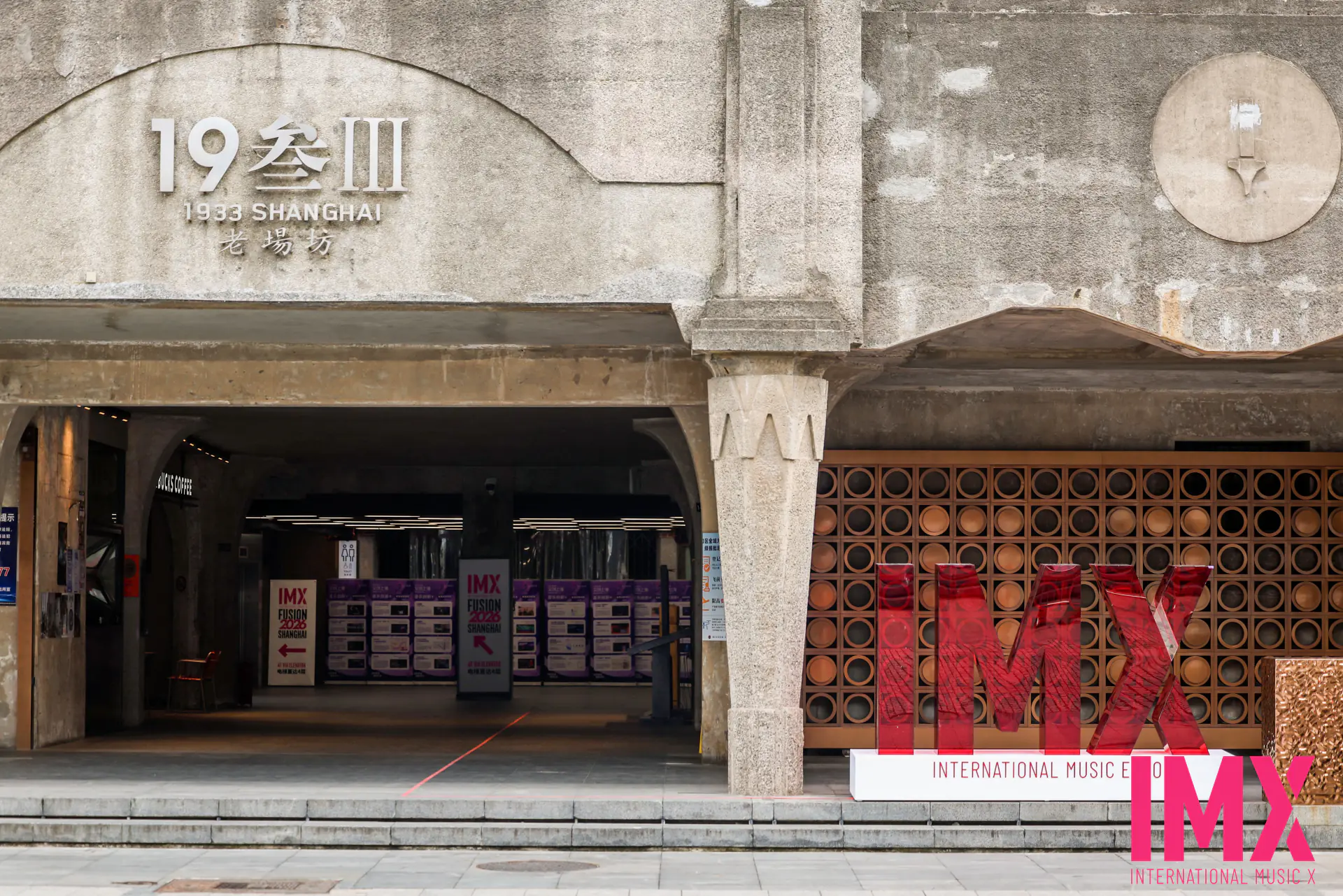
Under the soaring art-deco concrete arches of 1933 Shanghai, International Music X (IMX) convened Day 2 of its 2026 Shanghai summit on Friday, October 30. Building upon Day 1's focus on industry foundations and global corridors, Friday was dedicated entirely to The AI Frontier: Following artificial intelligence out of the studio and into A&R, distribution, marketing, licensing, and the commercial decisions that run a music company.
From early morning, the historic venue buzzed with executives from global streaming services, AI foundation model labs, collective management societies, independent labels, and international distributor networks.

AI Music Lab: Testing Real Value, Commercial Viability, and Global Potential
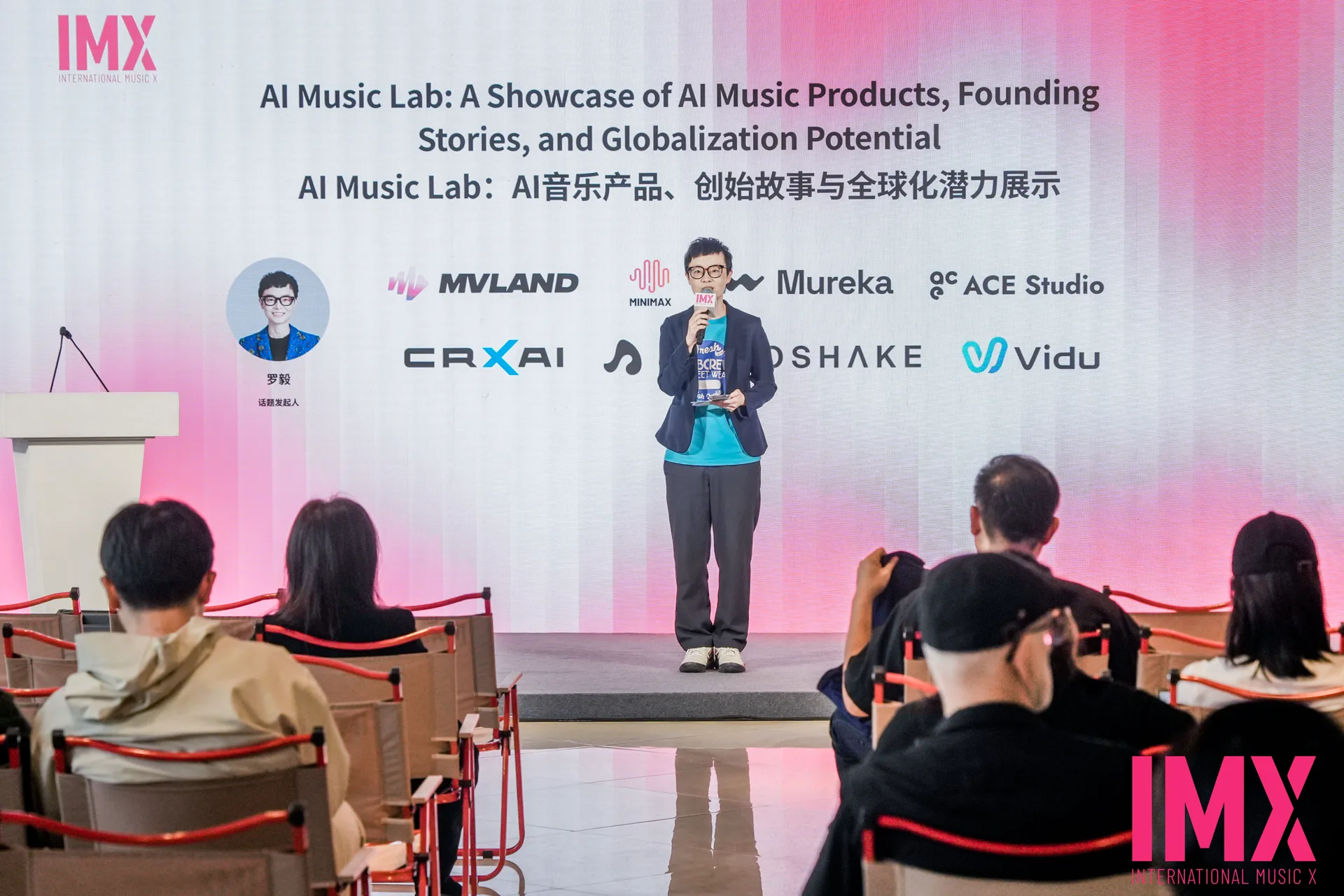
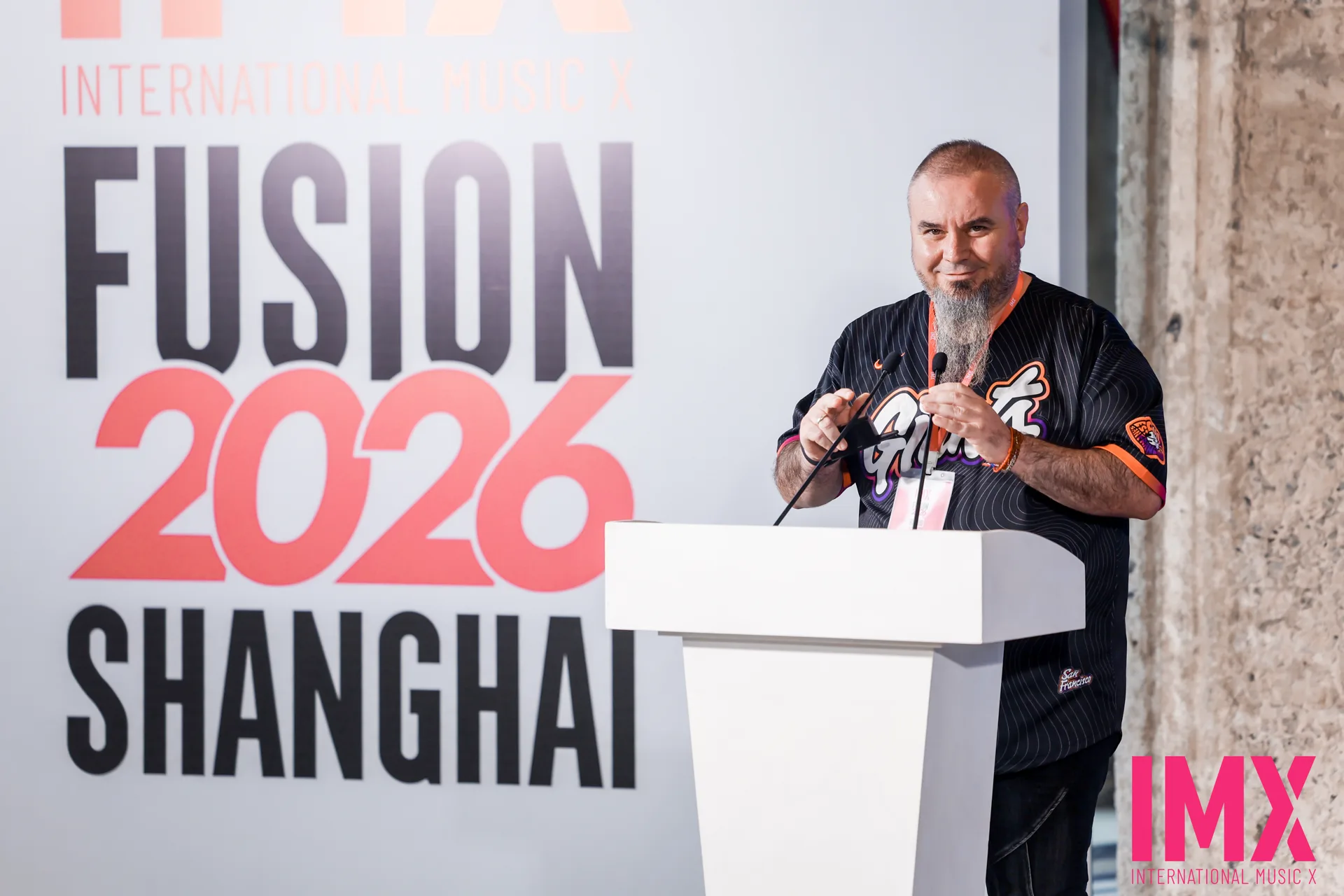
The morning began with the highly anticipated feature session: the AI Music Lab. Hosted by topic initiator Luo Yi, the session challenged pioneering AI music ventures to move past theoretical demonstrations and present live production workflows, technical architectures, and concrete user traction.
"The conversation around AI in music has rapidly matured," noted Luo Yi in his opening framing. "We are no longer debating whether algorithms can produce sound. Today is about testing whether AI products solve genuine pain points for creators, how they survive legal scrutiny, and what commercial models can scale internationally."
MiniMax: The Accelerating Foundation Model Evolution
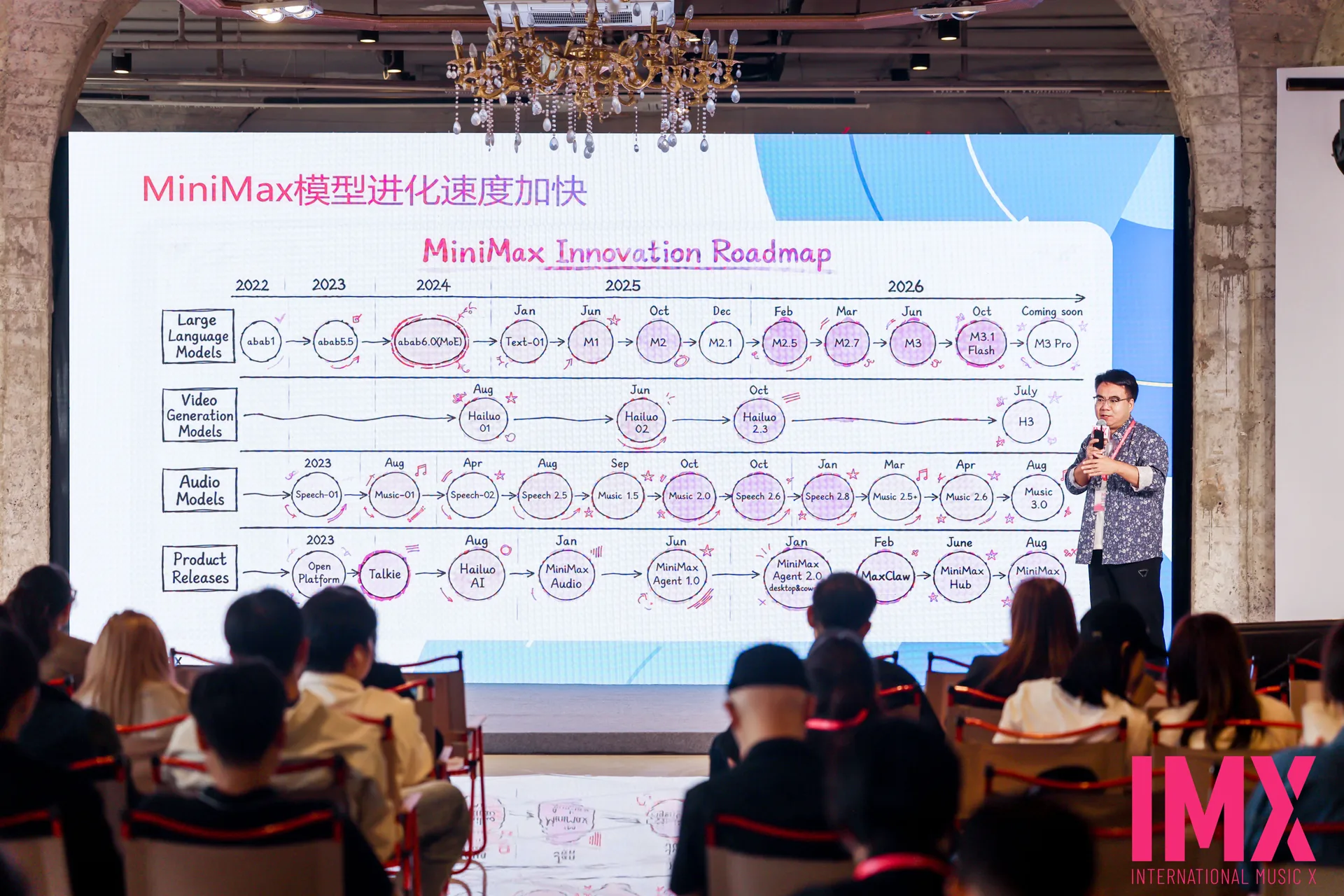
Zhang Ruhuan, AI Architect at MiniMax, presented an illuminating deep dive into the company's innovation roadmap across foundation models, large multimodal systems, and generative audio. Highlighting the rapid progression from early vocal models through the Music 01 generation to the latest Music 3.0 suite, Zhang demonstrated how fine-grained acoustic control, style conditioning, and multilingual synthesis are closing the fidelity gap between synthetic prompts and commercial broadcast quality.
The showcase outlined MiniMax's broader multimodal pipeline—integrating large language models, Hailuo video generation, and high-fidelity audio engines into cohesive creator workflows, signaling how consumer-facing creation tools are moving into professional media production.
ACE Studio: Expanding Neural Vocals into Full DAW Architecture
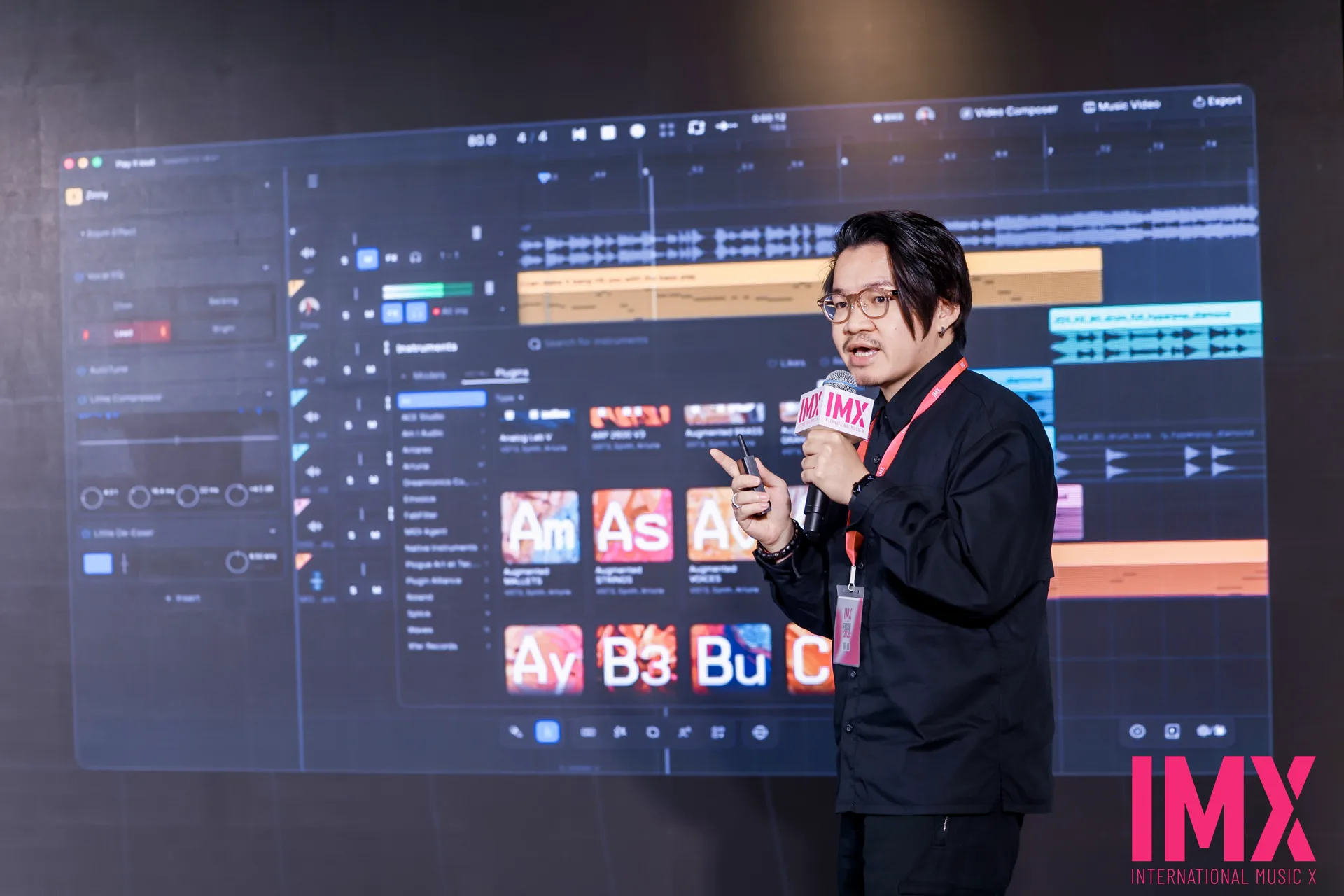
ACE Studio delivered one of the day's most technically impressive product roadmap demonstrations. Represented by CRAT and founder Guo Jing, the team demonstrated how AI vocal synthesis is graduating from web-based prompt interfaces into full-fledged Digital Audio Workstation (DAW) host environments.
Demonstrating their new product roadmap on the main stage, ACE Studio showcased native group tracking, send buses, sidechain routing, automated MIDI/Audio parameter editing, and smart tempo synchronization. Crucially, the platform now features a dedicated plugin rack capable of hosting industry-standard VST synthesizers, samplers, and dynamic audio effects. This seamless integration allows producers to embed neural vocal synthesis directly into standard studio mixing and mastering sessions without leaving their established workflow.
CRxAI: The AI-Ready Music Monetization & Rights Infrastructure
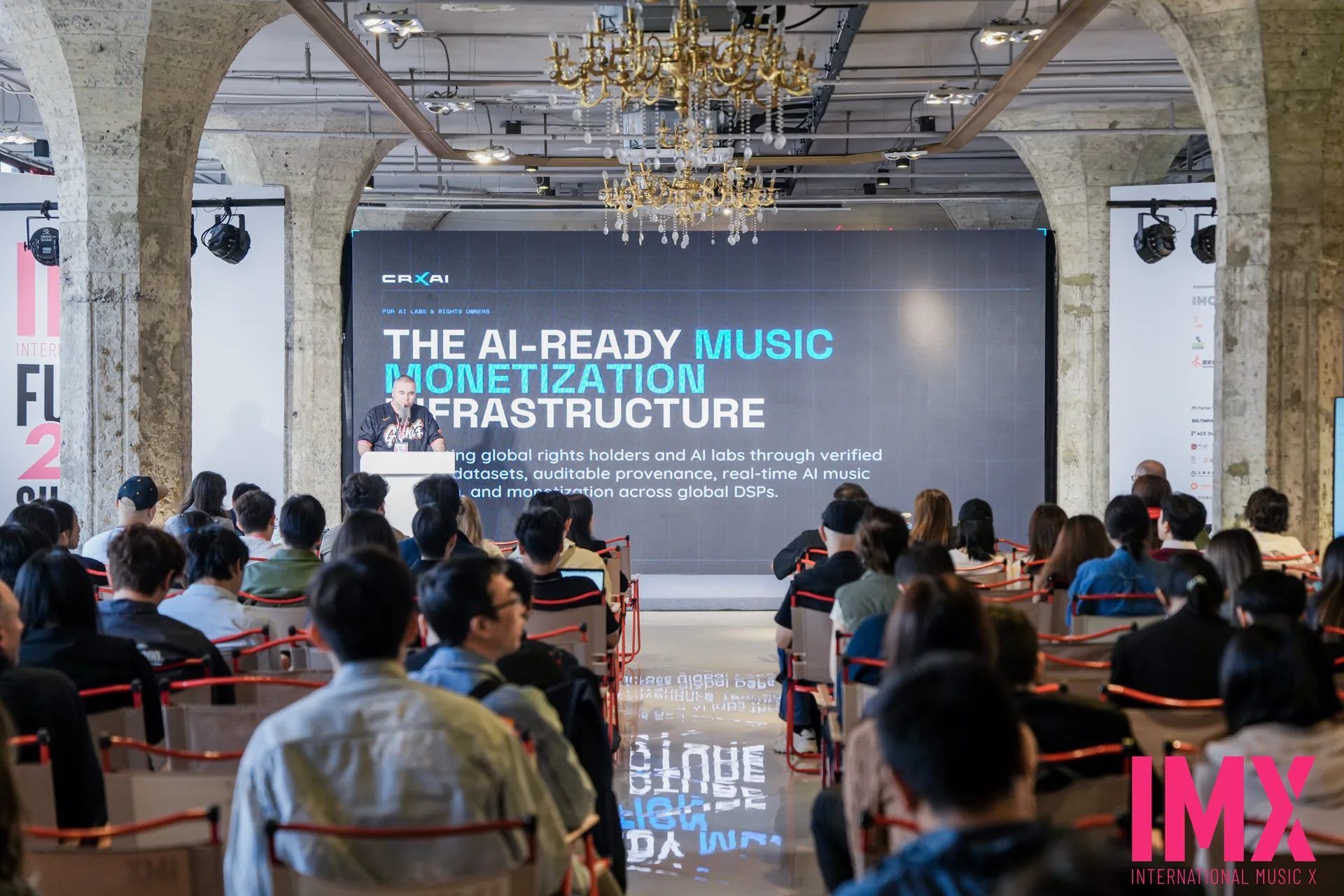
The morning's central institutional presentation was delivered by Tinko Georgiev, Founding Growth Architect at CRxAI. Georgiev addressed the foundational tension defining the AI era: while generative models demand vast datasets of professional music, rights owners rightfully demand enforceable boundaries, auditable attribution, and fair economic settlement.
Georgiev detailed the CRxAI X-Provenance Engine™ (XPE)—the auditable rights infrastructure turning copyrighted catalogs into permissioned machine learning and compliant downstream monetization. A cornerstone of the architecture is that rights owners never need to upload or expose raw audio files; instead, a mathematical audio fingerprint is securely extracted at the source, permanently anchoring rights rules to the work.
Georgiev outlined CRxAI's three foundational rights protocols: • Protect: Global blocklist enforcement ensuring unauthorized models cannot ingest catalog works. • Case-by-Case: Granular selective authorization enabling custom licensing terms and bespoke enterprise partnerships. • Monetize: Pre-cleared bulk licensing with auditable provenance and pro-rata royalty settlement across global DSPs and AI applications.
"Generative AI cannot achieve long-term enterprise scale on gray-market training data," Georgiev emphasized. "By bridging global rights holders and AI foundation labs through verified datasets, auditable provenance, and real-time monetization across DSPs, CRxAI ensures that creators are protected, respected, and paid."
Pioneering Showcases: Mureka, AudioShake, Vidu, and MVLAND
The product showcase expanded beyond vocal and foundation models to encompass the full spectrum of creator tooling, multimodal alignment, and catalog deconstruction:
• Mureka: Product Director Yuan Shuai demonstrated Mureka's intelligent creation suite, illustrating how consumer creation platforms are evolving toward structured, commercial-grade song production with intuitive prompt conditioning, style blending, and built-in community publishing pipelines. • AudioShake: Co-founder and CEO Jessica Powell shared breakthroughs in AI sound separation, detailing how high-precision stem isolation enables rights holders to unlock entirely new revenue streams from legacy master recordings—spanning interactive sync licensing, spatial audio remastering, immersive gaming, and multi-language localization. • ShengShu Technology / Vidu: Yu Xinrui, Product Solution Architect and East China Lead, showcased how large multimodal models bridge text, video, and audio synthesis, enabling dynamic soundtrack composition synchronized to generative video narratives. • MVLAND & CRAT: Exploring Web3 integration and virtual creator ecosystems, Tom from MVLAND and CRAT presented emerging architectures for AI-native virtual performers, interactive fan token economies, and decentralized digital stage experiences.
Crossing the Chasm: From Technical Demo to Global Industry Adoption
Following the product showcases, a high-caliber industry roundtable evaluated what still separates a convincing technical demo from enterprise adoption. Joining Tinko Georgiev on stage were Ronald Eekhoff (Founder & CEO, The Source B.V.), Guo Jing (Founder & CEO, ACE Studio), and Yu Xinrui (Product Solution Architect, East China Lead, ShengShu Technology / Vidu).
The panel confronted practical hurdles: enterprise security, copyright indemnification, international payment clearing, and metadata interoperability across disparate jurisdictions. Ronald Eekhoff stressed that global expansion requires software builders to deeply understand European and international licensing norms, while Yu Xinrui illustrated how multimodal video-audio alignment is opening new revenue streams across commercial advertising and interactive gaming.
Keynote: Which Layer of the Music Industry Is AI Truly Entering?
Transitioning the summit from studio tools to macro industry architecture, Hannah Chen, Head of Content Partnerships & Copyright at Mureka, delivered a sharp, illuminating midday keynote.
Chen argued that public debate remains fixated on generative music creation—the ability of an algorithm to output a three-minute song. However, the most profound and immediate enterprise transformations are occurring in the operational and logistical layers: automated ingestion, rights classification, real-time sync matching, and predictive licensing compliance. For music companies, mastering AI means deploying intelligent systems to manage catalog velocity, protect IP, and streamline global distribution pipelines.
From Tool to Label: The Platform Transformation Debate
Building directly on the keynote, an incisive roundtable explored the structural evolution of music creation suites: When creation platforms amass hundreds of millions of songs, will they become the next generation of record labels?
Joining Hannah Chen on stage were Yuan Shuai (Product Director, Mureka) and Darin Epsilon (Internationally renowned DJ, Producer, and Founder of Perspectives Digital).
The panel debated whether AI creation suites will remain subscription software utilities or inevitably transition into modern record companies—scouting AI-native artists, managing viral digital fanbases, and executing global streaming distribution. Darin Epsilon brought the essential artist and independent label perspective, discussing how human tastemakers, emotional storytelling, and community credibility remain the decisive filter in an era of infinite synthetic content. The speakers concluded that the future belongs to hybrid models: platforms providing frictionless creation tools, paired with human A&R curation to identify cultural resonance.
Midday Sound Reflections: Fleeting Hint Notes and Human Intuition
Providing a poetic counterpoint to algorithmic precision, the Midday Music Chat featured singer-songwriter Wang Chuan and producer He Xian discussing their collaborative album 《天使音乐》 ("Angel Music").
The duo shared their creative process, centered on capturing "Hint Notes"—fleeting acoustic intuitions, diary scribbles, ambient field recordings, and subconscious dream fragments. Their intimate conversation highlighted the fragile, lived human vulnerability that remains at the core of enduring songwriting, illustrating that while AI can simulate production textures, it cannot manufacture personal life experience.
Sound Without Borders: Building the Asia-Russia-CIS Music Corridor
In the afternoon, the spotlight turned to cross-border market expansion with a major roundtable titled Sound Without Borders: Jointly Building the Asia-Russia-CIS Music Corridor. Moderated by Olga Demina (Executive Director, CIS & Eastern European Markets, Daflow.ai), the session convened leaders across Eastern Europe, Russia, and Central Asia: Alexey Evseev (Founder & CEO, Vector Sound), Vlad Yankovsky and Mikhail Kryukov (SFEROOM), Anton Diachenko (Founder & CEO, MMG; Organizer, NAMI Festival), Natalia Averina (Founder & Director, Russian World Music Awards), and Yerbolat Bedelkhan (Founder, Juz Entertainment).

The panel mapped practical solutions to connect Asian and Eurasian music ecosystems, discussing bilateral catalog exchanges, localized DSP promotion, cross-border payment settlements, and synchronized touring corridors spanning Shanghai, Almaty, Tashkent, and Moscow. The speakers stressed that despite geopolitical headwinds, cultural and commercial music bridges between Asia and Eurasia are expanding at record velocity.
Proactive Regional Networks: The China–Japan–Korea Initiative
Regional integration was further cemented during the Asia Special session, which unveiled a joint China–Japan–Korea industry collaboration initiative: How can the Asian music industry build a more proactive global collaboration network?
Featuring Tomishi Kato (Executive Director, DAFLOW Japan), Shiyuan Gu (License & BD Director, International, NetEase Cloud Music), and Yan Yan (Head of Community MCN, Xiaohongshu / RedNote), the panel outlined joint commitments covering industry research, creator residency programs, cross-border metadata standardization, and collaborative AI licensing pilots.
Tomishi Kato emphasized that Asian music ecosystems must move beyond fragmented, reactive strategies: "By forming an integrated regional corridor that pools rights, distribution networks, and creator talent, East Asian music companies can engage global DSPs and Western markets from a position of collective strength."
When AI Runs Operations: What Must Music Companies Master?
The afternoon reached its intellectual peak with a flagship roundtable addressing the operational core of music enterprises: When AI Starts Doing A&R, Distribution, and Marketing, What Else Must Music Companies Master?
Moderated by Luo Yi, the panel united Louis Lu (CEO & Founder, Xiaoxu Music), Zhou Linjie (Head of Marketing, iFLYTEK Music), Yan Jun (Head, NextStage), and Zhang Chang (General Manager of Commercialization, Sony Music China).
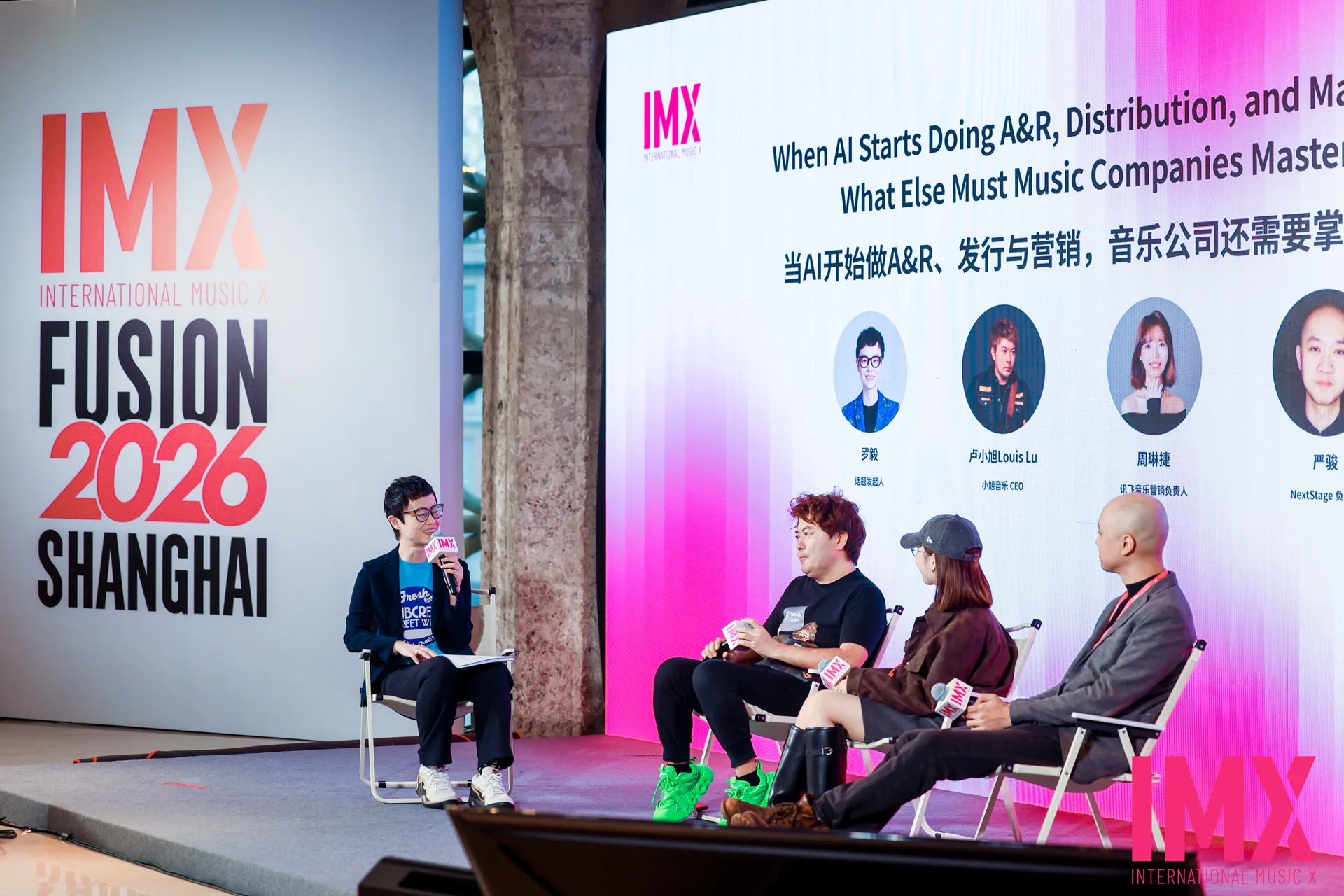
The speakers dissected how automated analytics now track song momentum in real time, generate promotional assets, and optimize digital ad spend. Zhou Linjie highlighted iFLYTEK's experience deploying algorithmic targeting while maintaining human emotional connection with listeners, while Louis Lu emphasized that production automation frees creators to focus on higher-level conceptual storytelling.
Yet all panelists agreed on a vital truth: while machine intelligence can execute operations, the defining judgments of a music company—discovering raw talent, knowing when a cultural moment is ripe, maintaining artist trust, and exercising aesthetic conviction—remain entirely human.
The Curatorial Soul: Why Festival Lineups Cannot Be Algorithmic
Closing the afternoon program, a distinctive roundtable and demonstration confronted the curation of live musical experiences: From Artist Booking to Music Festival Curation: The Irreplaceable Judgment in the AI Era.
Featuring Ai Jing (AJ) (Founder, Haze Sounds), Shi Yongchen (CEO, Boshan Entertainment), and Ma Meng (Founder, Canran Culture), the curators demonstrated why festival curation resists algorithmic automation.
Analyzing how memorable lineups and festival stages are conceived, the curators explained that a music festival is not a playlist sorted by stream counts; it is an emotional journey, a community ritual, and an act of cultural risk-taking. Balancing emerging subcultures against headline acts, managing audience energy across day and night, and cultivating spaces of genuine discovery require intuitive cultural sensitivity that algorithms cannot forecast or replicate.
Atmosphere, Dialogue, and Community
Beyond the formal stage sessions, the halls of 1933 Shanghai were alive with executive networking, bilateral licensing negotiations, and spontaneous creative exchanges.


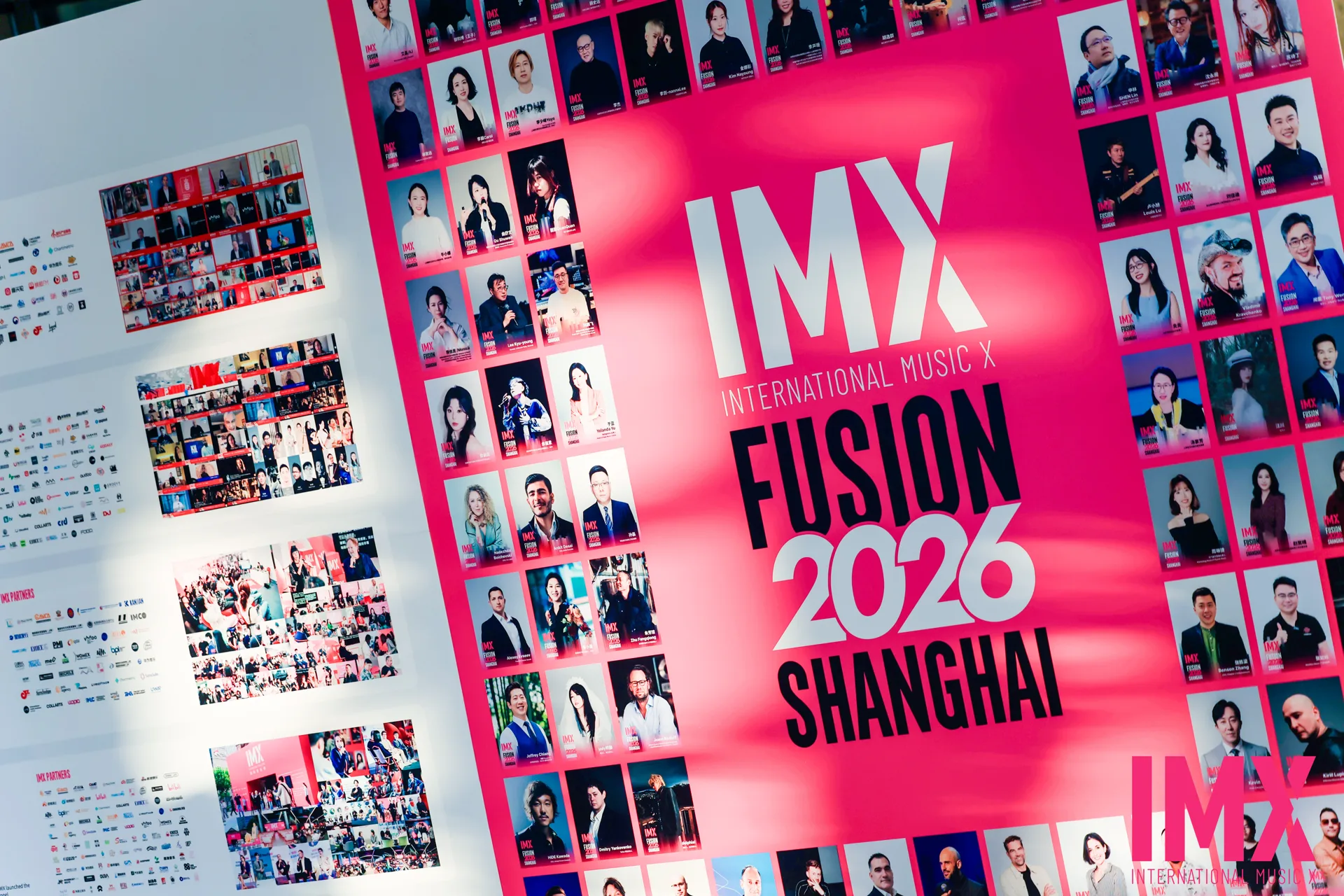
The summit's expansive speaker wall stood as a testament to the diverse international community convened in Shanghai—spanning independent rights holders, major label executives, technology founders, and cultural diplomats from over twenty countries.
Looking Ahead to Day 3: Human Creativity
As Day 2 drew to a close, attendees gathered across 1933's skywalk lounges and private reception suites, continuing discussions sparked on the stage.
While Day 1 established the industry's institutional foundations and Day 2 demystified artificial intelligence, Day 3 will turn toward the core reason the music ecosystem exists: Human Creativity, Songwriting, and Artist Development. The final day promises to celebrate the songwriters, producers, and performers whose imagination and vulnerability continue to inspire everything that technology seeks to serve.
Other Articles
IMX 2026 Shanghai Day 1 Recap: Industry Foundations, Global Corridors, and What Remains Scarce in the AI Era

IMX Reschedules Seoul Edition to 2027 and Rallies Global Network in Full Support of the Seoul Music Forum

IMX 2026 Announces the Second Confirmed Speakers
IMX 2026 Announces the First Confirmed Speakers
IMX Unites IMCJ, LIAK, SIMCA & A2IM For APAC AI-Ready Music Monetization Summit

IMX 2026 Sponsorship Opportunities: The Global Advantage

One Trip, Three Markets: The Shanghai-Seoul-Tokyo Circuit

IMX Seoul Announces Co-Hosting With LIAK And IMFS

Announcing IMX Almaty And IMX İstanbul 2026 Co-Hosts

IMX 2026 Spotlights AI, Rights Tech & Web3 Music Innovation

Trade Missions Open: Connecting European & American Delegations to APAC

Open Call for International Artist Showcases across 5 Circuit Cities
